Power Hungry: The Difference Between a Boss and a Leader and Why it Matters.

Above are the words of Peter Parker's uncle Ben just a few hours before he was tragically killed by a thug - the catalyst for Peter to fully embrace his hero alter ego, Spider-man. And for Peter, the choice was clear.
But in the real world, where heroes seem few and far between these days, the call to use strength as a hand instead of a hammer has largely been silenced.
No more do we see this than in the modern workplace. Say the word leadership, and half the room lights up—thinking growth, curiosity, innovation, possibility.
The other half hears something entirely different: authority, leverage, control.
Both groups assume people in charge seek power in order to “lead.” But the truth is: only one of those modalities actually produces leadership.

Real leadership isn’t about gripping tighter to maintain control. As Sir Richard Branson has demonstrated for decades—on islands, in boardrooms, even in balloons drifting above the Earth—leadership is about letting go with confidence in the people you hire.
How We Learned to Follow the Wrong Models
Since college—studying Speech, Communications, Debate, and Influence—I’ve been fascinated by what drives human behavior. Whether it’s one person influencing a crowd or a movement inspiring a single individual, I’ve spent my life watching how ideas shape people and how people shape movements.
Over the years, I’ve noticed something unsettling: Many leaders climb the success ladder through sheer force of will, grit, and relentless ambition…and when they reach the top, they tend to pull that ladder up behind them.
The Power Chasers
You know these types.
They crave titles, deference, the thrill of command. They thrive on pressure. They devour challenges, sprinting from victory to victory like a shark that has to keep moving or die.
I used to wonder why they didn’t retire once they had enough money to live happily and quietly. After interviewing so many of them through the years, I finally understood:
Their relentless pursuits is them living happily.
The idea of slowing down—sunshine, calm mornings, reflection—sounds like death to them. These Alpha males and females crave the certainty and remain hungry for more, but all too often lost sight of - or never had insight into - what truly matters in the long run.
And history is filled with reminders of where that path leads.
Hubris and the Fall: The Great Depression

During the Great Depression, newspapers printed heartbreaking headlines: magnates, bankers, and industrial titans—men who had built empires of control—jumping from buildings when their wealth vanished.
Their identities were welded to power so tightly that when the illusion shattered, they shattered with it.

1912: The Titanic
Decades before the Depression, the Titanic famously carried millionaires and moguls across the Atlantic—men confident enough to proclaim the ship unsinkable.
Yet when the ocean struck back, wealth and status provided zero insulation. Power didn’t buy permanence. Influence didn’t buy immunity.
The Atlantic swallowed privilege as easily as it swallowed steel.
The lesson is timeless: Power is temporary. Control is an illusion. And none of us escape the great equalizer. So why are so few of us able to understand this notion, or at least strive to? For me, living on a ball of dust in the middle of nowhere - an infinite and vast nothingness - is a bloody miracle!

Zoom out even further.
Consider Carl Sagan’s immortal reflection on the Pale Blue Dot — that tiny speck of Earth photographed from nearly three billion miles away by Voyager 1:
“Think of the endless cruelties… the rivers of blood spilled by all those generals and emperors so that, in glory and triumph, they could become the momentary masters of a fraction of a dot. All our striving. All our conflict. All our ego. It all plays out on a blue pixel floating quietly in the dark. And yet, power-driven “leaders” cling to their illusions anyway. They micromanage with the same desperation those 1930s magnates clung to ledgers. They stifle talent, choke autonomy, and demand compliance over creativity—because they cannot lead what they cannot dominate."
These are the sots, intoxicated by authority, unaware that it costs them the trust of the very people they need most. Does that trust matter? Maybe not. Until it does.
The Leaders Who Actually Lead

Contrast the above with Branson’s philosophy:
Pick great people.
Set them up for success.
Give them meaningful work.
Then get out of their way.
It’s not a motto. It’s a worldview.
And it reflects a truth the Titanic and the Depression made painfully clear: Our legacy is not what we build for ourselves—it’s what we build in others and the path we forge for those who come after.
This philosophy has been a guiding principle in my own life as I've parented my children and mentored youth and business subordinates.
Power-hoarders build empires that can crumble - and often do.
Leaders build people who rise.
Consider the Chinese proverb that states: "A leader is best when people barely know he exists; when his work is done, his aim fulfilled, they will say: 'we did it ourselves.'"
TRUE leaders:
Distribute authority instead of clinging to it
Trust instead of police or divide
Cultivate innovation instead of smothering it
Welcome challenge instead of fearing dissent
Which naturally (and usually) brings me to the wisdom of crowds.
Groupthink vs. Crowd Wisdom

Power-based cultures breed groupthink—that forced sameness where disagreement feels dangerous. Creativity suffocates there. I've been in far too many of these cultures where those at the top got there through grit and determination, but never stopped to broaden their perspective, and certainly allowed no one to second guess them or provide feedback.
"My way, or the highway."
This clear gap in human skills always breeds a contentious environment where employees scramble - like children with an unrelenting parent - for favor. It fosters a sense of indentured servitude and clearly stifles growth for the organization as well as the person in charge.
It's toxic and 100% ego-driven.

But high-trust environments unlock crowd wisdom—where diverse perspectives collide and new thinking emerges. It’s the birthplace of innovation.
This is the space where my work lives.
I don’t just train leaders. I help repair cultures damaged by power addiction—turning them into environments where people can thrive while promoting the company's best interests at the same time - news flash: These two disciplines don't have to be mutually exclusive.
The Red Pill
Here is the uncomfortable but liberating truth: Every one of us ends up in the same place.
Whether billionaire or barista, CEO or intern, captain of industry or passenger in steerage—we're all going to die.
(Even Elon).
So the real question becomes: If we all end at the same destination, what kind of path are we carving along the way?
Greed, fear, tight-fisted authority which gives the hollow illusion of control and forces others to automatically rebel from it (see also "Quiet Quitting").
vs.
Autonomy, generosity, trust ... where others thrive, and in turn, make business better. Choosing amazing people and giving them the room to crush it is next level.
I've seen this first hand. I've worked to reduce recidivism in customer calls. I've trained leaders to manage their people UP instead of OUT. I've created culture shifts in companies where silos were broken down, and people actually learned to enjoy working together instead of against each other.
But this has to start at the top.

Forbes has a list of the top 25 Traits of Bad Bosses. I'm quite certain you've worked for someone who has at least a few of these.
The most egregious ones to me include: Micromanagement; Playing Favorites; and the worst one: Not Trusting the People You Hire.
I cannot tell you how many times I've had poorly trained managers hire me to 'get their people in line' or 'make them better workers,' when all the time it was their leadership style - or lack thereof - that was the issue.
Eventually I stopped taking on clients who blamed poor performance, low morale or turnover on the employees. Not seeing yourself as a mentor, a coach or a leader, ready to enhance the skills of a subordinate, tells me all I need to know about your own skills as a worker and frankly as a human.
"There aren't enough strong candidates out there!" i've heard this a million times too. But as a coach I can tell you this: Virtually anyone is trainable. You just need to find their listening style and speak to it. You must invest time in their skills and growth. You get them interested in how they can contribute, and they will do anything for you.
The Point
From this humble futurist’s perspective, the future has never belonged to the power-hungry. Power feeds on immediacy—it needs dominance now. The future, by contrast, belongs to those willing to invest, nurture, and wait.
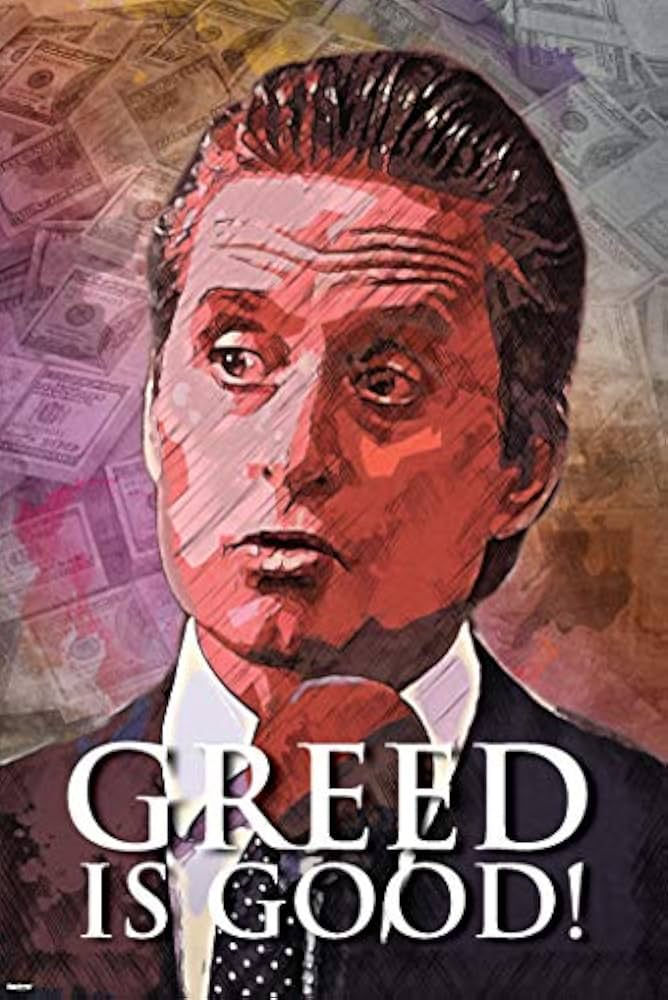
That distinction explains the familiar arc we so often see: power-chasers burn bright and flame out, leaving scorched teams, broken cultures, and collateral damage in their wake. Their legacy is intensity, not endurance.
And to be clear, we owe much of our progress to hard-working visionaries who truly moved the needle—people whose ambition helped humanity not just survive, but thrive. Progress demands effort, courage, and risk.
But somewhere along the way, ambition surrendered to greed.
It’s hard to argue that many of today’s billionaires haven’t traded their original passions for an ever-escalating fever dream of more. More wealth. More control. More insulation from consequence. What begins as a vision too often becomes accumulation for its own sake.

As Harvey Dent famously warned in The Dark Knight:“You either die the hero, or live long enough to see yourself become the villain.”
Too many modern titans seem determined to outrun that truth—building not just generational wealth, but generational dominance—while ignoring the long arc of history, the only lens that truly matters. From that vantage point, hoarding helps no one. It advances no species. It solves nothing that lasts.
And isn’t that precisely where great responsibility should live? If power exists at all, shouldn’t it exist to move all of us forward?
Instead, we indulge in the hunger for power while neglecting the hungry. We idolize wealth while excusing the poverty of purpose that often accompanies it.
That isn’t leadership. It’s a failure of imagination.

And those who don't care about what happens to future generations as long as they get their giant slice while they can, simply shouldn't be allowed to be in charge of anything that only serves themselves, or worse - diminishes humanity as a result of their greed.
IMHO, the future belongs to the people who know how to work together—So why not seed a brighter future instead of a greedy one? Why not lead the way Branson does—by lifting people up rather than holding them down?

Happy employees don't start unions. Well supported people don't quit for a few more bucks. Motivated and appreciated people will always give more than expected. How do modern 'leaders' miss this crucial point?
It's been said... People don't quit jobs, they quit managers.
That's a fact.
If this perspective strikes some readers as naïve—if the instinctive response is “you can’t trust anyone; you always have to watch your back”—that reaction itself proves the point. You cannot build trust while assuming betrayal. And you cannot unlock the best in people if you begin by doubting them.
Now, to be fair, not everyone is equally driven, sharp, or willing to build something from nothing. That’s true. But it’s also true that not everyone who holds power earned it that way. In my experience, those who fall into authority—or seek it for purely self-serving reasons—often become the most anxious guardians of their positions. Fear, not confidence, fuels that behavior.
But power was never meant to be absolute. It is an opportunity—to elevate others, to multiply capability, to create conditions where people exceed even their own expectations.
That is the quiet difference between power and leadership.
In the end, leadership isn’t about who stands above others. It’s about who chooses to stand with the people who make us all better.

And that brings us back to the truth we started with:
With great power comes great responsibility.
Spidey chose great responsibility - as all great leaders do. He understood that power isn’t about spinning webs to trap others—it’s about creating connections that hold when things fall apart.
And things inevitably always fall apart.
What do you think? Can an inclusive, motivating boss be effective in business?
For sure - we need more true 'leaders' in business
No way - people take advantage of nice guys
It depends on the mission of the company & the type of work


Comments